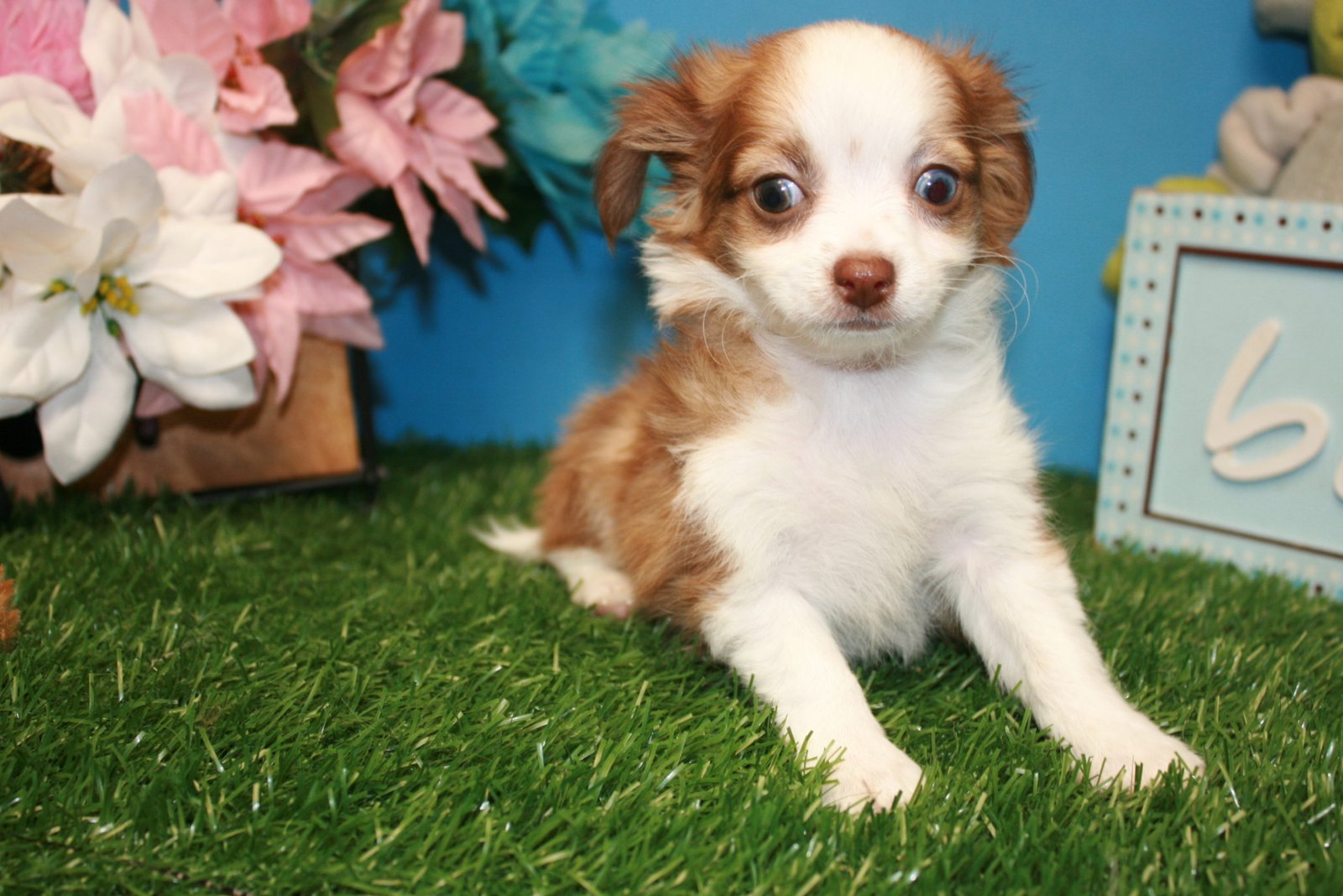
Available Chihuahua puppies for sale

6 – 9 inches.
1 – 6 lbs
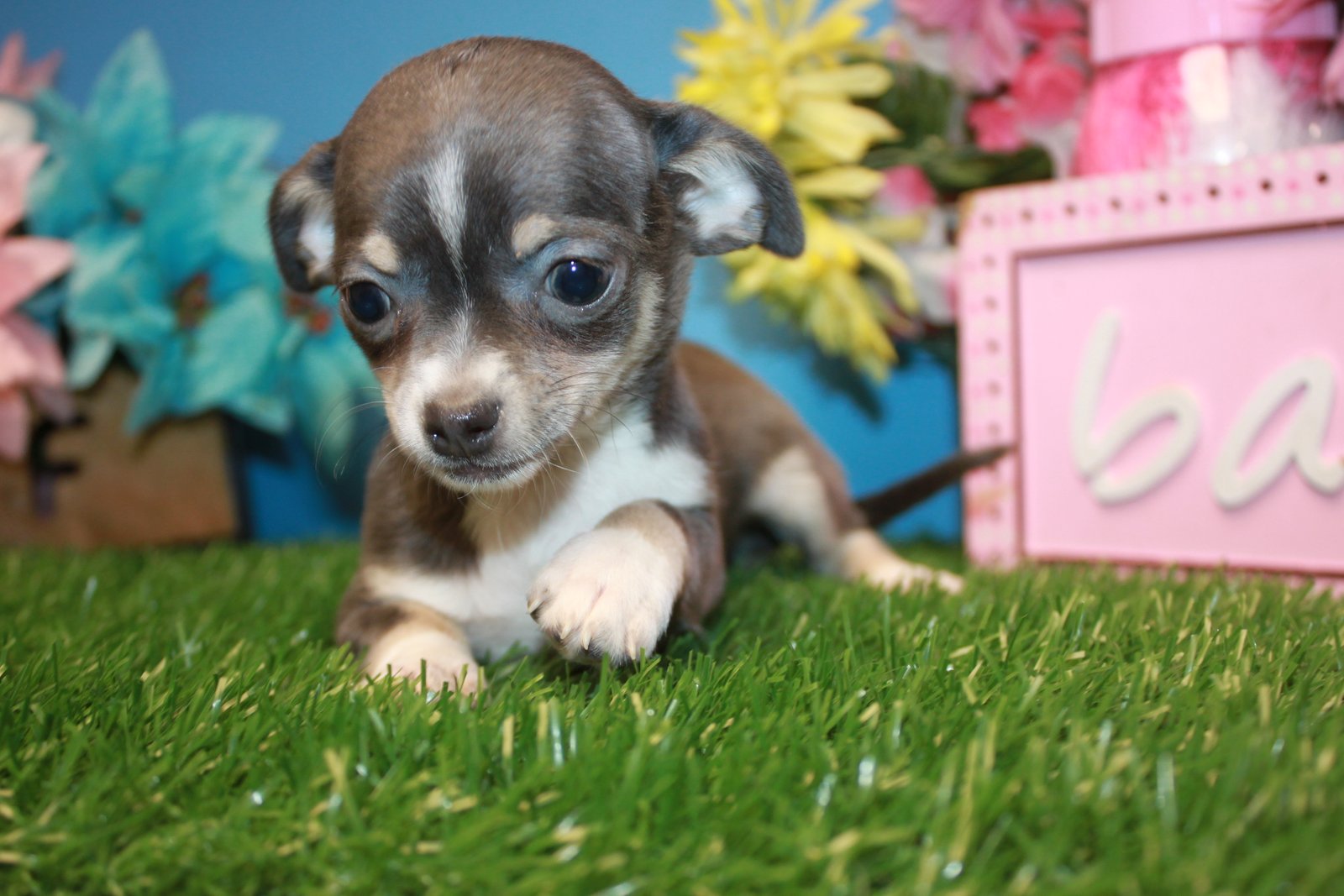
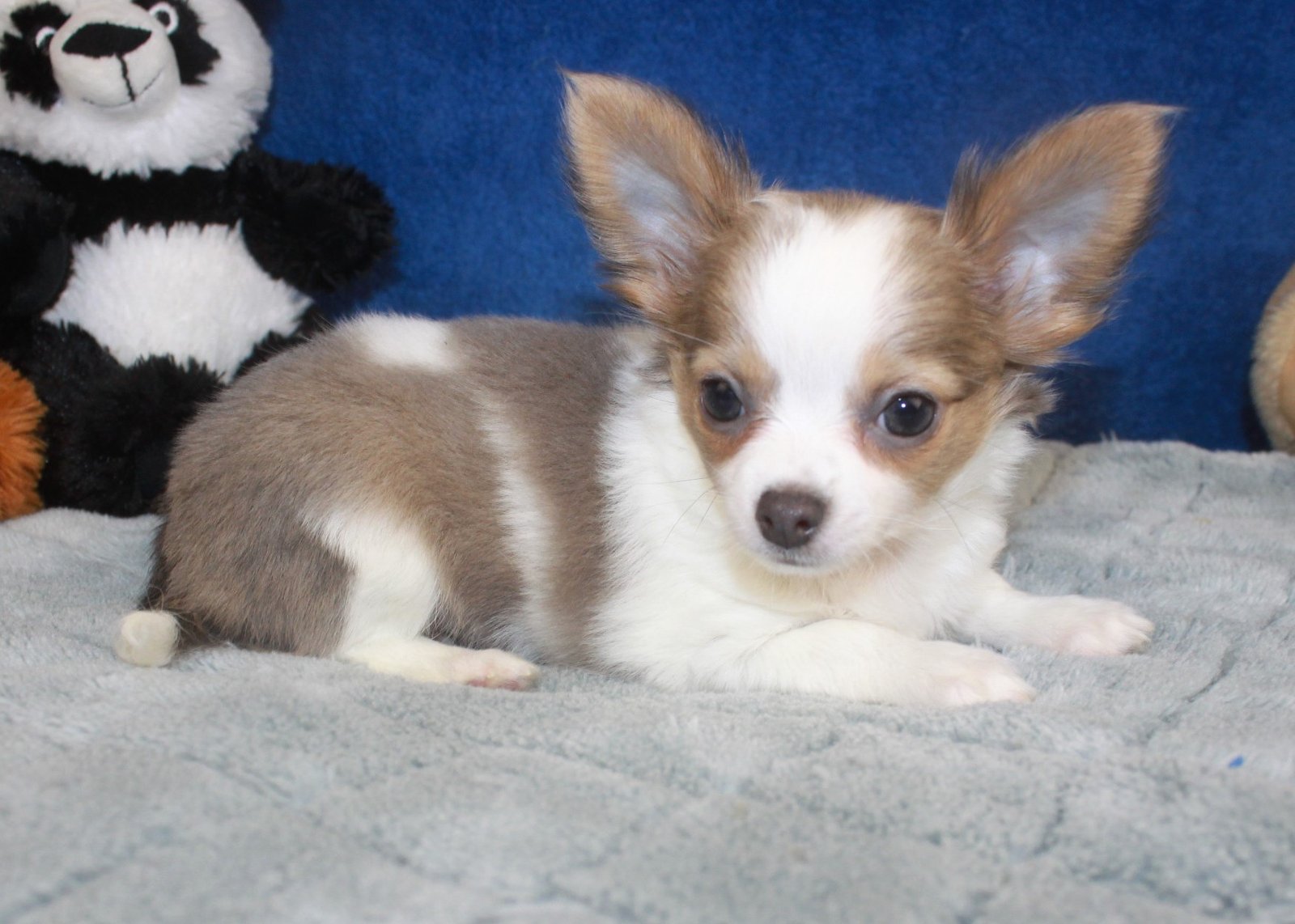
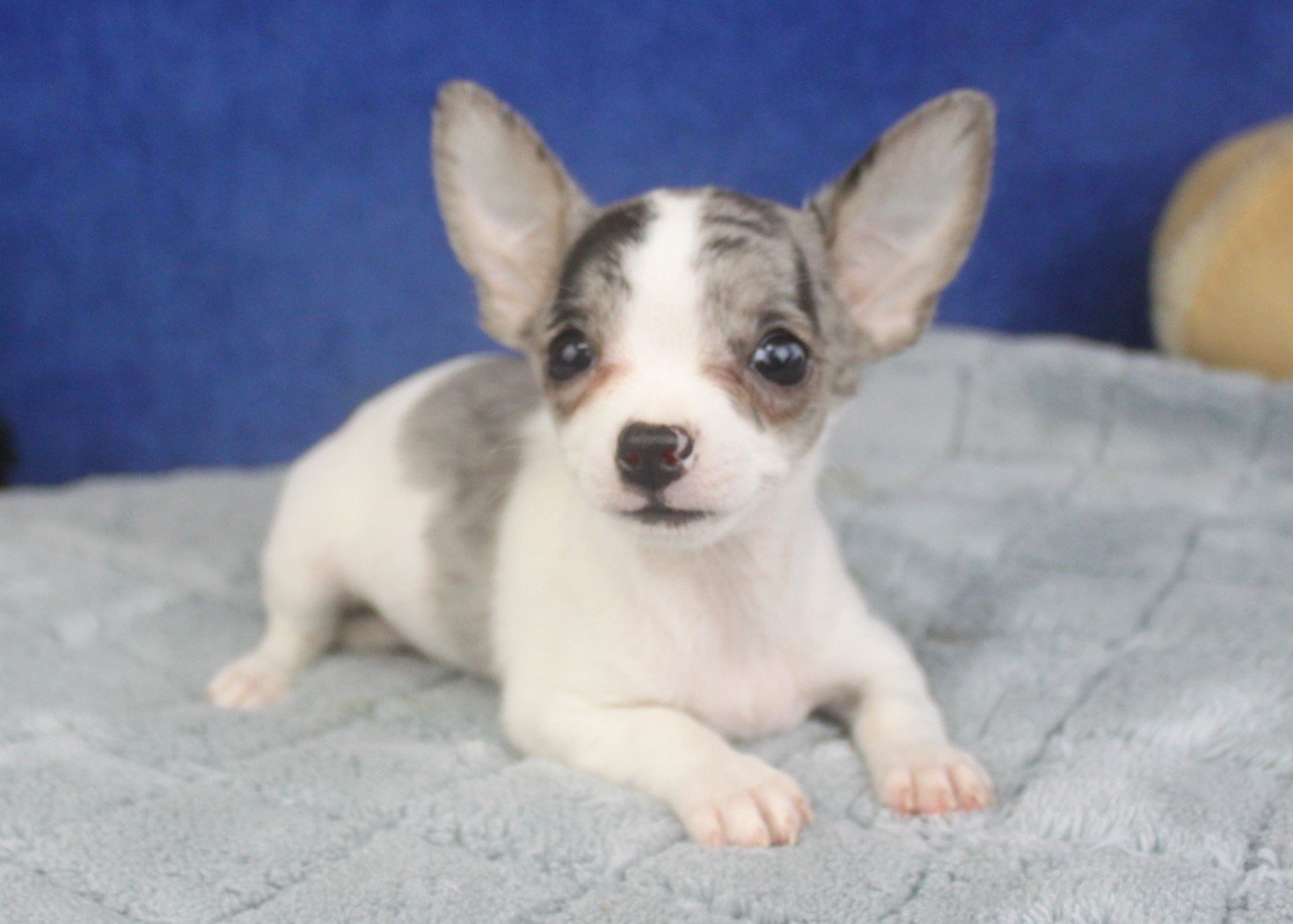
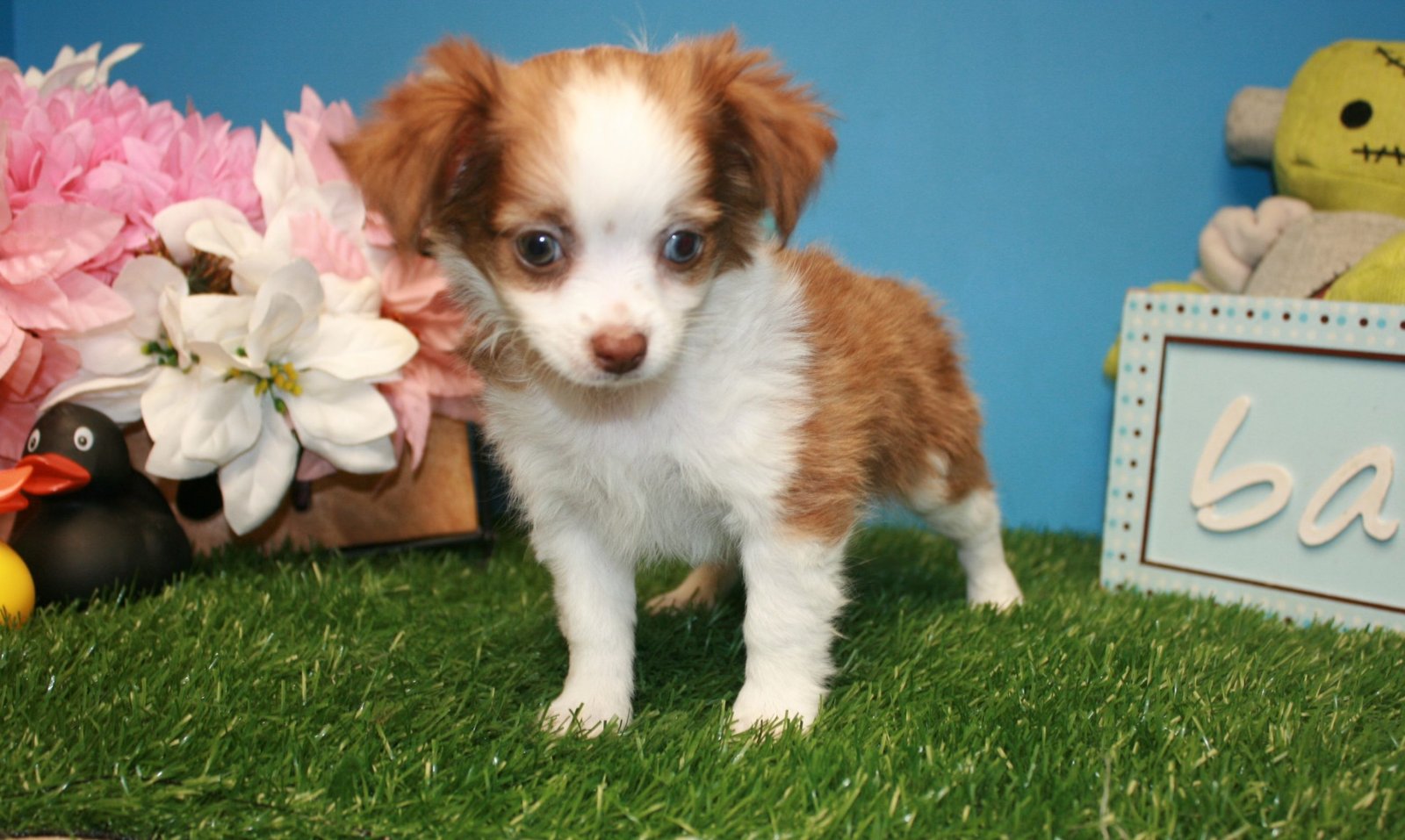
Any color or mixture is allowed. The coat can be solid, marked, or splashed in any color combination. The more common colors are red, sable, fawn, black and tan, tricolor, and brindle.
Long coat: Long, soft to touch, slight waviness is permissible. They have a lot of fringe and often have an undercoat. They have a large fringe on the neck and feathering on the tail, feet and legs. Short coat: Short, glossy, dense, and soft to touch. Both versions may come from the same whelp, although the interbreeding of the two is not allowed anymore.
Low
Must live indoors due to their fragile bodies, but they enjoy outdoor activity.
12 – 14 years.
1 – 4 puppies.
Mexico
Chihuahuas are bold or shy, playful and very alert. They love to alert their owners to whatever is going on, and some tend to bark. Some breeds are afraid when the wind blows, while others will challenge dogs many times the size of themselves. They tend to be quite devoted to one person. They are sometimes reserved with strangers and a favorite among the elderly. They are graceful, humorous, and a good watchdog. Although playful, Chihuahuas are not to be messed around with. They can be aggressive towards other dogs and wary of strangers. On top of that, they are quite fragile and do not tend to realize it when picking a fight.
Yes, If children are gentle. Chihuahuas should be socialized early on to avoid any aggressiveness, which usually results in the Chihuahua itself getting hurt due to their easy breakability.
Yes, lives happily with others as long as it is socialized early on. Some Chihuahuas can become hostile towards other animals if they are not introduced early on. They tend to be one-owner animals, but can be fine with other pets as long as they are socialized.
Family pet.
Very High. They are very alert and some love to bark.
Very Low. Bold as they are, a Chihuahua has no chance against another dog or person.
Short haired Chihuahua should be brushed gently or wiped with a damp cloth. The long haired Chihuahua should be brushed daily with a soft bristle brush. Bathe only when necessary. Check ears regularly and keep nails trimmed. Chihuahuas should be socialized early so that they will get along with other dogs and pets. Minimal exercise is required for both varieties of Chihuahuas.
High. Chihuahuas are very intelligent.
Socialization, supervision with children and other animals.
Collapsing trachea. heart problems, hydrocephallic, and patellar luxation. Other health concerns include eye problems and hypoglycemia. Chihuahuas are very fragile dogs whose bones can break easily.
Discovered by Americans in Mexico around the mid-nineteenth century, around 1850, the true origins of the Chihuahua’s ancestors still remain a mystery. Several theories seem to indicate that Spanish traders may have brought a small dog from China to Mexico in their explorations, and from there that small dog bred with the local dogs, possibly the Mexican Hairless Dog or Techichi, a breed kept by the Aztecs and Toltecs. Others say the breed was mixed with the Chinese Crested. The Techichi was a breed, in legend, used by the Aztecs and Toltecs as sacrificial dogs and possibly even as food. Chihuahuas’ coats were the determinate for whether they lived or died, according to myth. The Aztecs are said to have believed that Chihuahuas born of blue coat were sacred, while those born of a red coat were sacrificed on funeral pyres. Other theories suggest that Chihuahuas have been around for thousands of years, having lived with the Africans, transported to Malta in 600 B.C., and then lived there for centuries. The likeness of a Chihuahua was recorded in Rome in the Sistine Chapel on a fresco painting by Botticelli in 1492. Not only did this little dog get around to Europe, but in 1910 a zoologist uncovered the remains of a tiny dog in Egypt who shares the same characteristic soft spot, or mollera , on the skull that Chihuahuas currently have. Therefore, they may have also existed in Egypt some 3,000 years ago. In the 1850s, a few of these small specimens were brought to America from Mexico, but remained out of the spotlight until later. The Chihuahua first came to be known popularly in Mexico City around 1895, and the breed was named after the city it supposedly came from, Chihuahua, Mexico. In 1904 it was registered by the AKC, and has since gained popularity in the States. Even more popularity came to rise after certain Taco Bell commercials, using this tiny canine as the icon of their company, ultimately causing every Chihuahua owner to help their dog learn the phrase “¡Yo quiero Taco Bell!”
1904
Toy
Toy
Moderate. Some Chihuahuas will play and jog with their owners, while others are just too small to do a lot of exercise. They are the ultimate lap dog.
AKC, CKC, FCI (Group 9), KC (GB)